Flood Lights

By Josh Benge
13 September 2015 at Bedfordview PM

[easy_media_download url=”https://www.dropbox.com/s/depd992qrw04gyx/20150913-PM-Flood-lights-JB.mp3?raw=1″ color=”blue” force_dl=”1″]

Living In Faith

By Lance de Ruig
13 September 2015 at Bedfordview AM

[easy_media_download url=”https://www.dropbox.com/s/tk00u035lrabwjc/20150913-am-living-in-faith-LdR.mp3?raw=1″ color=”blue” force_dl=”1″]

The book of Lamentations

Once, a pastor went with a few friends to a bookshop and walked out with a commentary on Lamentations. “Lamentations!” his friends chuckled. You may even have a little chuckle to yourself when you realise you are reading Lamentations – well done! Most haven’t read it, ever.

The reading plan has done its best to be as chronological as history directs. Lamentations is taken as written by Jeremiah although it is strictly anonymous. Following the history up to this point you would have read the virtually endless pleas and warnings from God about pending trouble if the nation of Israel doesn’t change its ways of wickedness. Judah has managed to hold off an attack and exile longer than Israel. But time is up and in 587 B.C the horror of horrors befalls Jerusalem. Nebuchadnezzar and his powerful and utterly brutal Babylonians destroy the city. It takes time to destroy the once muscular walls, level the palaces and great houses, but most painfully they set the Temple on fire, destroying it and taking all its valuables and precious artefacts.

The people suffered too. All but the poorest of the poor are carried off to Babylon. This left Judah as a province of Babylon. Gedeliah, a Babylonian appointed governor, is killed a few months after being installed. Those left in Jerusalem (of which Jeremiah chose to be one) became increasingly scared and planned to flee to Egypt. Jeremiah tells them that God says he will protect them and they should stay, but they accuse Jeremiah of lying and he leaves with them to Egypt. Jerusalem and Judah was left battered and barren.

Lamentations is a poetic book recording the total despair felt at this time. It laments the city and the people’s fate. It acknowledges that their sin has been great and God did warn them. It deals with the emotion of finding out that behind the Babylonian destruction was not a powerful nation but their God himself.

The context of the letter makes it very readable and understandable. Keep in mind that you are reading picture-rich poetry. Here are the main ideas of each chapter:

Chapter 1 – Jerusalem is weeping and wailing. Sin is the cause and God is just in his actions. A plea for punishment of the enemy and restoring of Jerusalem.

Chapter 2 – A taking stock of the problem and the punishment. And acknowledgement that only the hand that dealt the blow can restore the nation again.

Chapter 3 – This chapter balances the awfulness of God’s judgment with the righteousness of his character. The people are urged to repent and return to God, hoping that Babylon would fall in the future.

Chapter 4 – The horror of the present is highlighted by showing the extent of the former glory of Jerusalem.

Chapter 5 – a prayer and appeal to the Lord to restore the fortunes of his people physically and their relationship with him as their God.

Pic: Gebhard Fugel

The book of Habakkuk

Understanding Habakkuk might be one of our most important tasks since the coming of the prosperity gospel to the church in the 1950’s. Habakkuk sees God’s people suffering and expects prosperity. He prays over and over and God is seemingly doing nothing about it. So Habakkuk was troubled with the eternal “Why?”

Habakkuk has seen the fall of Assyria. He had been through the contending for power by the Egyptians and Babylonians. Now he knows that God has warned that Babylon might attack Judah if they don’t repent of their wicked behaviour.

Habakkuk records his interactions with God. He asks two major questions. Firstly, why is Judah in such disarray and why is God doing nothing to help them out of it? God answers by saying that the desperately wicked Babylonians will invade and exile them. Secondly, after hearing God’s answer to the first question, Habakkuk wants to know why Babylon feature in his plan when they are actually more wicked that Judah? God answers yet again. Habakkuk comes to a place where he doesn’t understand everything but he does understand God, and he realises that he can fully trust the God he has come to know.

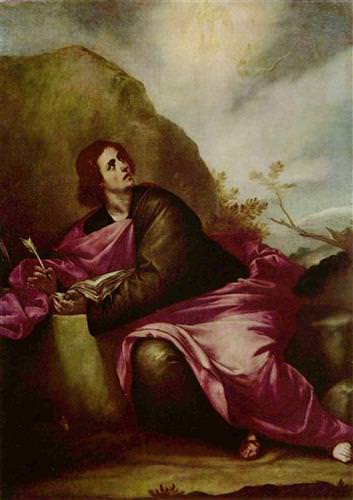
Pic: The Prophet Habakkuk, by Girolamo Romanino, from the Sacrament Chapel of the church of St. John the Evangelist in Brescia, Italy. (1521-4)

Study Habakkuk more in-depth

This six part course covers the Old Testament book of Habakkuk, showing how a Christian can respond in times of perplexity. The course is periodically taught at our Equipping Courses (evenings or mornings).

Download the course booklet in your preferred format below:


Enquiring Of God

By Jonathan Warmington
6 September 2015 at Bedfordview PM

[easy_media_download url=”https://www.dropbox.com/s/ckjtmmcwlkwlvfb/20150906-PM-Enquiring-of-God–JW.mp3?raw=1″ color=”blue” force_dl=”1″]

Elijah: Pt7

By Marcus Herbert
6 September 2015 at Bedfordview AM

[easy_media_download url=”https://www.dropbox.com/s/kqv30tx54op3n3a/20150906-elijah-pt7-MH.mp3?raw=1″ color=”blue” force_dl=”1″]

Download notes

Resurrection Matters

By Nathan Gernetzky
30 August 2015 at Bedfordview PM

[easy_media_download url=”https://www.dropbox.com/s/56t1enq7a94rz7v/20150830pm-Resurresction-matters-NG.mp3?raw=1″ color=”blue” force_dl=”1″]

The book of Jeremiah

Jeremiah prophesied for more than forty years. He wrote down his material on a great scroll with the help of Baruch his scribe. The material is not arranged chronologically and it would seem he wrote down the words that came to mind when he felt that it was necessary to unravel the scroll and record more. His main words are directives concerning Judah; three cities – Jerusalem, Babylon and Damascus; seven Gentile nations; and the Messiah. A mark of Jeremiah’s prophecy is the object lessons he employs to explain God’s revelation to the people. Our imagination bubbles as we will think of him wearing a rotten girdle or yoking himself like an ox and then breaking a bottle in the presence of the king as he explains what God wants to be known.

Jeremiah is the ninth of the prophets. He prophesied to the southern kingdom of Judah before and during the days of captivity. He witnessed three major historical events in his life:

(1) The battle of Megiddo between Judah and Pharaoh-Necho the Egyptian (the battle in which king Josiah was killed).

(2) The first defeat by Nebuchadnezzar when Judah was a vassal for Egypt.

(3) The capture of Jerusalem by Nebuchadnezzar and the exile of Israel to Babylon.

At just 21,  Jeremiah tells us more than any other prophet about himself. He begins by being worried about his age, inexperience and inability to speak well. But God has his way and Jeremiah faces many attacks, insults and strong disapprovals as God’s mouthpiece. His writing is full of emotion and he seems to be a humble, tender, yet strong man.

In reading through the book you will find that chapter 1 is taken up with the call of Jeremiah. Chapter 2-38 concerns Judah before the fall of Jerusalem. With long silences between the prophecies are what was said during the reign of Josiah (2:1-12:17), Jehoiakim (13:1-20:18; 25:1-27:11) and Zedekiah (21:1-24:10; 27:12-39:18). During the reign of Josiah the prophecies mainly concern warnings and God’s knowledge of Judah’s sin with a call to repent and change. Jehoiakim’s reign saw God declaring the judgement of Judah and surrounding nations. Nebuchadnezzar places Zedekiah on the throne in place of Jehoiakim (in his 4th year as king). Chapters 39-52 are during the reign of Zedekiah and are taken up with Zedekiah’s false prophets and Jeremiah in a continual stand off. Jeremiah also predicts that Judah will be in exile longer than they think and tells them that they will definitely return, the Messiah will come, and that the scattered of Israel will recover.

Jeremiah’s word to Judah could be summarised as follows: chosen, captured, carried away, coming Messiah.

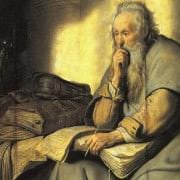
Pic: “Jeremiah” by Rembrandt van Rijn (1630)

The book of Zephaniah

Fifty years has elapsed since the prophecy of Nahum. Zephaniah was most likely a prince in the house of Judah, being a descendant of Hezekiah. He lived during the reign of Josiah, a good king after two idol worshipping kings had followed Hezekiah. When king Josiah (only eight years old) took the throne the situation in Judah could not have been worse. Social injustice, moral corruption, and spiritual suicide pervaded idolatrous Judah. The words of Zephaniah must have really encouraged Josiah who would become one of the most loved of Judah’s kings.

At the beginning of his reign, Hilkiah the Priest guided Josiah and tended to keep the status quo. Then Josiah came under the influence of Zephaniah. At 16 he destroyed the altars in Jerusalem. At 20 he destroyed pagan altars throughout Judah. At 28 he began to rebuild the (by now) decrepit-looking temple of God. While cleaning the temple they discovered the Law of Moses and were shocked when they read what was inside. He ordered the Law to be read and obeyed in the whole land. But the people never really changed from the heart. Josiah is unfortunately killed in battle and the people don’t heed the message.

Almost every time in the Old Testament, when the day of the Lord is mentioned, it refers to a period of time. When numbers are mentioned before the day it may refer to 24-hours. The ‘day of the Lord’ is a time of the Lord’s special working. Through Zephaniah God is warning Judah that a time is coming when God will act in judgement and special power to rid them of idols, taking them into captivity.

Zephaniah introduces three important concepts (see if you can spot them). Firstly he shows us that a faithful remnant of people will return from captivity. Secondly the salvation and conversion of non-Israelites. And thirdly that one-day people will be able to worship God anywhere and not only in Jerusalem.

Terms that could trip you up

Milcom – also Molech. A netherworld god whose rituals were similar to Canaanite origins focussing on dead ancestors. Child sacrifice was a big part of Molech worship.

Threshold – a single stone that spanned the doorway and was slightly raised compared to the floor. It seems there were Near Eastern superstitions about stepping on the threshold somehow allowing demons that haunted the entrance to come in.

Second Quarter – the walls built by Hezekiah along the Western hills of the city of Jerusalem (2 Chron. 32:5)

The Mortar – a district in the city of Jerusalem called upon to repent. Mortar was the Market district.

Gaza and Ashkelon – Philistine cities in the late seventh century.

Cushites – the Ethiopians. It is unclear why they are denounced.